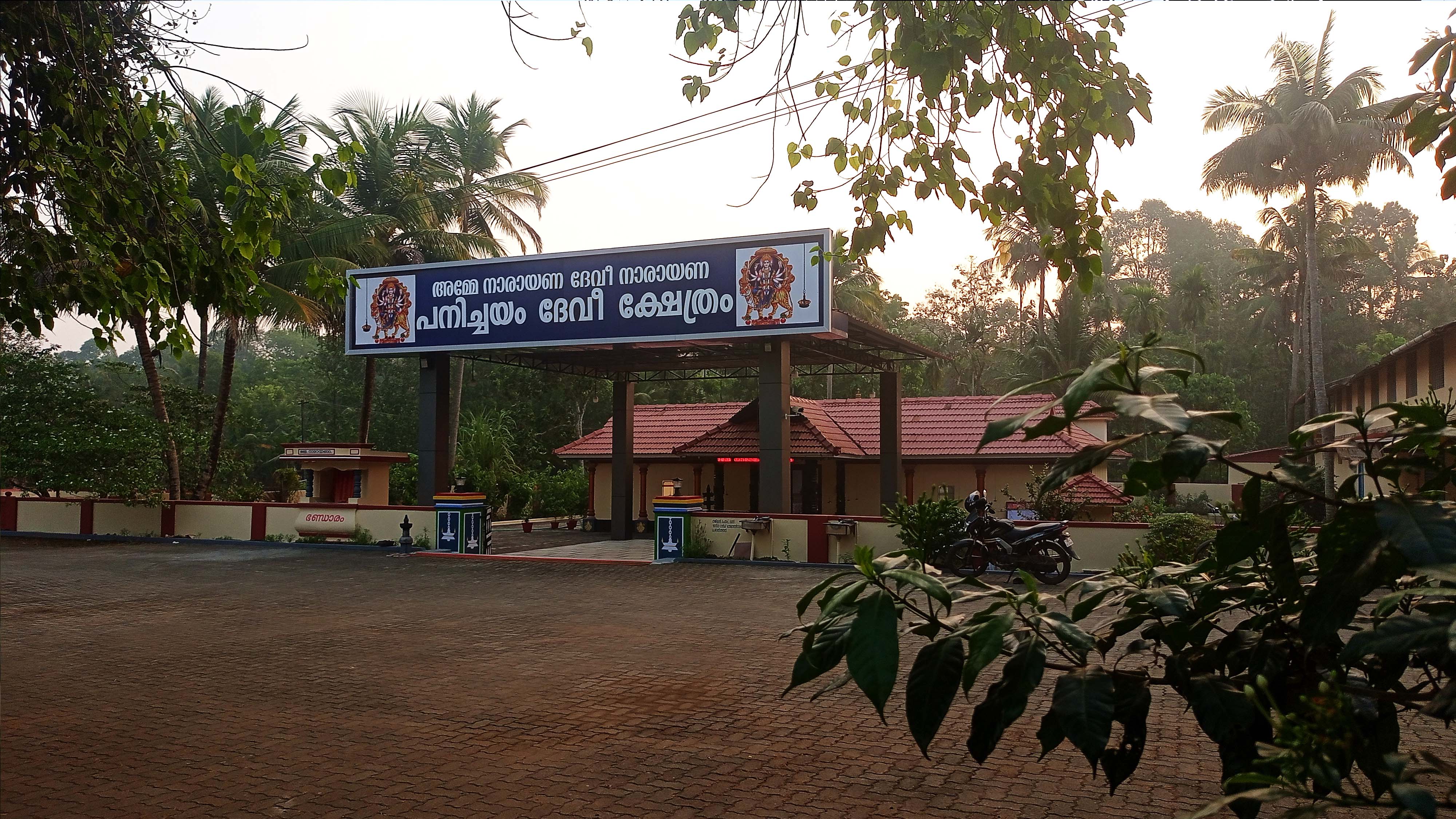

Panichayam Devi Temple
The sacred groves (kavukal) are the guardians of nature. Among thousands of sacred groves, the Panichayam Kavu is the guardian, refuge, and strength of the Panichayam land. Abounding in grace, Goddess Sree Bhadrakali presides over this sacred grove, which has been known since ancient times as Panicherikkavu and the deity as Panicheri Muthi. Goddess Sree Bhadrakali is the presiding deity here. As a serene embodiment, Mother Devi showers all prosperity and reigns over Panichayam with a gentle smile as a bestower of boons. The Panichayam Muthi serves as a refuge for devotees from far and wide around Panichayam. Devotees from various lands, transcending caste and creed, arrive here to worship the Mother, who answers when called, and to seek her blessings. Without caste and religious distinctions, entry to the Panichayam Kavu has been permitted to all since ancient times. A clear, written history of the Panichayam Kavu, situated in Panichayam within Asamannoor Panchayat, has not been found until now.
Nevertheless, the history of Panichayam Kavu can be understood by connecting it with the facts handed down by elders through the ages, as well as the history of Asamannoor and the nearby Kallil Bhagavathy Temple and Asamannoor Temple. The Kallil Temple is believed to have been established by Jains in the 9ad century (Note: 9th century). Around that same time, worship of deities, temples, and sacred groves may have begun in Panichayam and the surrounding lands. The presence of the 'Ailyakshi' (Ilayakshi) idol—one of the principal deities of the Jains—at the Panichayam Kavu is evidence of this. During the era of the Jains, who lived by agriculture while following non-violence (ahimsa), cows were worshipped. Animal sacrifice and similar rituals did not exist back then. Later, as time passed, the protectors and managers of the grove changed, and practices like animal sacrifice (mrigabali) and guruthi were introduced.
Although guruthi existed at Panichayam Kavu at one time, this grove has maintained its existence through an agricultural culture. Originally, the idol of Panicheri Muthi was seen positioned on top of a few arranged laterite stones in the middle of vast paddy fields extending as far as the eye can see. A custom existed here of offering a share of the harvest obtained through agricultural prosperity to Panicheri Muthi and holding the Thalappoli Mahotsavam once a year. Devi Vilasam Yogam, Panichayam, is a trust formed by the local people for the Panichayam Devi Temple. In the early days, activities began with Sri P.K. Chandrasekharan (PKC) as President and Sri K. Krishnankutty Nair as Secretary. The meeting held on March 13, 1967, decided to build a sanctum sanctorum (sreekovil) and renovate the temple from its dilapidated state. On July 8, 1968, the sanctum sanctorum was built, and the temple, having performed its pratishtadinam, was renovated with the sreekovil built in the manner seen today. Sub-deities and idols such as Rakshas, Chitrakoodam, Nagayakshi, Nagaraja, along with Ailyakshi, Anthimahakalan, Vellambhagavathi, Sastha, and others are present here. The prabhusthana pratishta, which grants a position to the lord/chieftain who ruled the land, is also found here. To the right of the Devi, within the chuttambalam, there is also a Ganapathy idol.
Kadu payasam, pushpanjali, and guruthi pushpanjali are the main offerings here. Offering silk and a tali (mangalsutra) for marital bliss is also considered one of the principal offerings here. While in the early days the festival was celebrated for 3 days on the Revathi, Aswathy, and Bharani asterisms in the month of Kumbham, later the festival began to be celebrated grandly over 10 days with extensive art and cultural programs. Garuda thookkam, para nirakkal, and kalamkarikkal are the main offerings during the festival. The Thalappoli Mahotsavam at the Panichayam Devi Temple, which used to feature over a hundred Garuda thookkams, is very famous. Until recent times, the Devi was taken in procession to homes in the lands surrounding Panichayam, and the para nirra offering was performed. Today, people from all walks of life, transcending caste and creed, gather together enthusiastically in the village to celebrate the Thalappoli Mahotsavam with devotional fervor. Several temples are located in the lands near the temple, including Kottekkavu, Iringol Kavu, Asamannoor Sree Thiruvallappun Temple, Punniyam Mahadeva Temple, Kallil Bhagavathy Temple, Nooleli Siva Temple, and Kulakkunnel Temple. Oottupura facilities for conducting auspicious ceremonies and ample parking space for vehicles have been arranged by the temple administration.
Click here to get the location : Location